
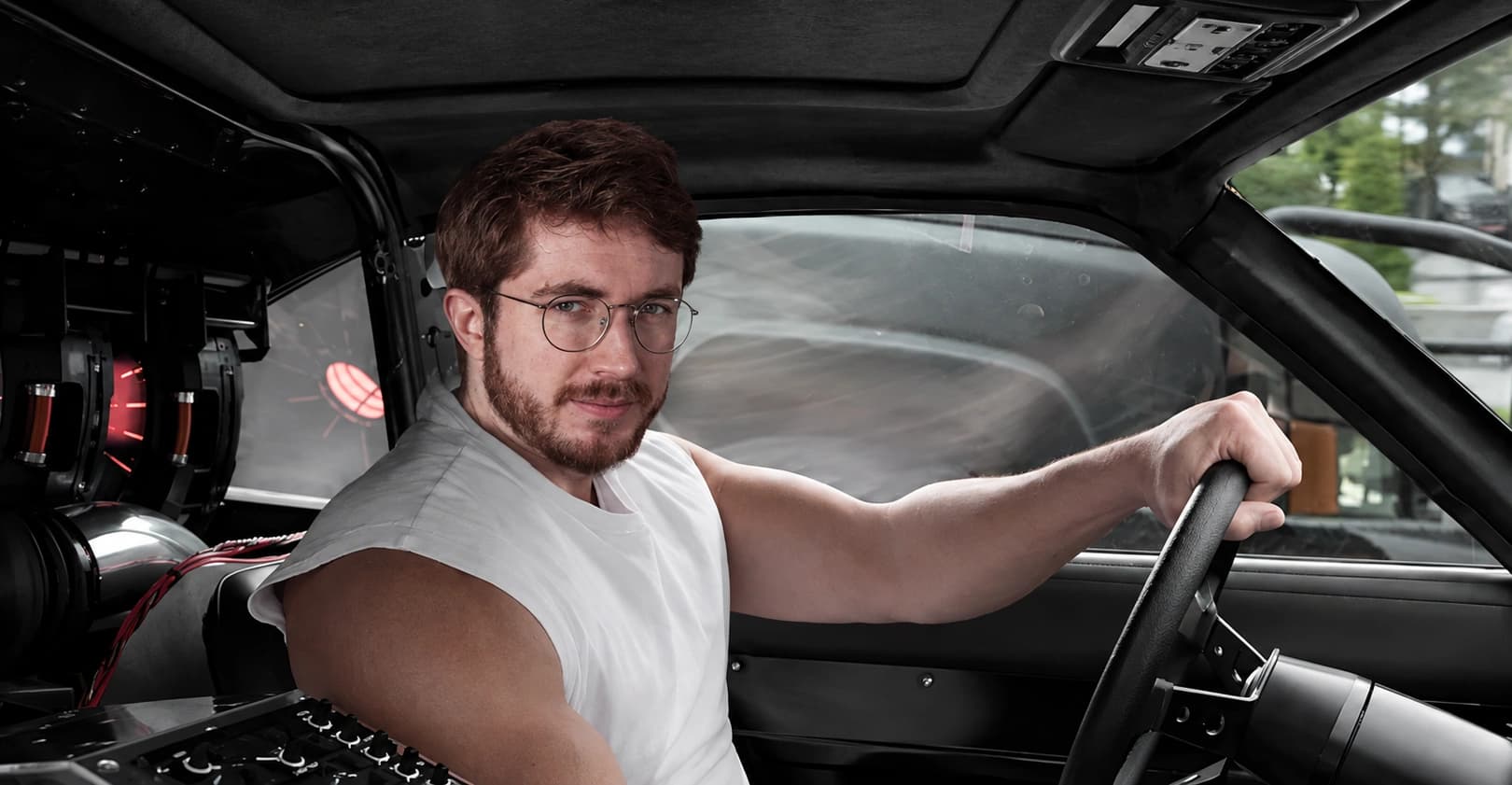
FROM ARAM MAIN TO FORMULA ODIN WINNER: THE IMPROBABLE RESURRECTION OF TURBOSLAV
Once hailed as the next great thing in Formula Odin, Vahishton Turboslav spent much of Season 3 looking like a driver who had forgotten how to drive. But after months of misery, a questionable return to controller gaming and one unforgettable afternoon in Zandvoort, the Czech prodigy has finally found his way back to the top.
There are few things more cruel in motorsport than watching a promising talent lose his way. There are even fewer things more satisfying than watching that same talent find it again.
Vahishton Turboslav knows both experiences better than most.
After an impressive debut campaign in Season 2, the Czech driver appeared destined for great things. Consistent performances, several standout weekends and a reputation as one of the most exciting newcomers on the grid eventually earned him the prestigious edg™ Rookie of the Year™ award at the Formula Один Season 2 Award Ceremony™. Mercedes came calling for Season 3, expectations were high, and the future looked bright.
What followed, however, was nothing short of a sporting catastrophe.
FIVE ROUNDS OF PAIN
The 2026 campaign began in China with Turboslav finishing dead last. Mercedes had missed the setup entirely, leaving him with no grip, and things only got worse from there: a poor Safety Car restart on lap 7, a switch to mediums and a pit crew misunderstanding that nobody at Mercedes has been willing to explain. The only silver lining was the "pure sicko" rating in this publication's power rankings.
Singapore offered little relief. It was another low-grip struggle, where qualifying dropped him into the middle of the pack, surrounded by three of the grid's most aggressive drivers: Yisk Svensson, Daniil Blyat and Alejandro Alonso-Sainz. None of the three is known for leaving the space, and with no grip to fight back, Silver Carlos became the collateral damage, shoved into the run-off for good measure.
Things improved slightly in Spain and Spa, but the two recovery drives to P8, which somehow counted as good weekends, were hardly the results that the fans and Mercedes were expecting.
And then there was the Principality of Monaco, where everything that could go wrong did. First the McLarens decided to get in his way in qualifying. In the rain-soaked sprint, conditions that should have played into his hands instead saw him forced to take out his own teammate, Fabiano Utz Claus Kaltenbach, and then box for a new front wing, his old one still bloodied. Taking out a teammate is never a good look. Some teams consider it a crime against family.
Sunday was no kinder. Alonso-Sainz, the paddock's resident front-wing demon, claimed his wing before they had even reached Turn 1, and the rest of the afternoon was spent being blue-flagged to death.
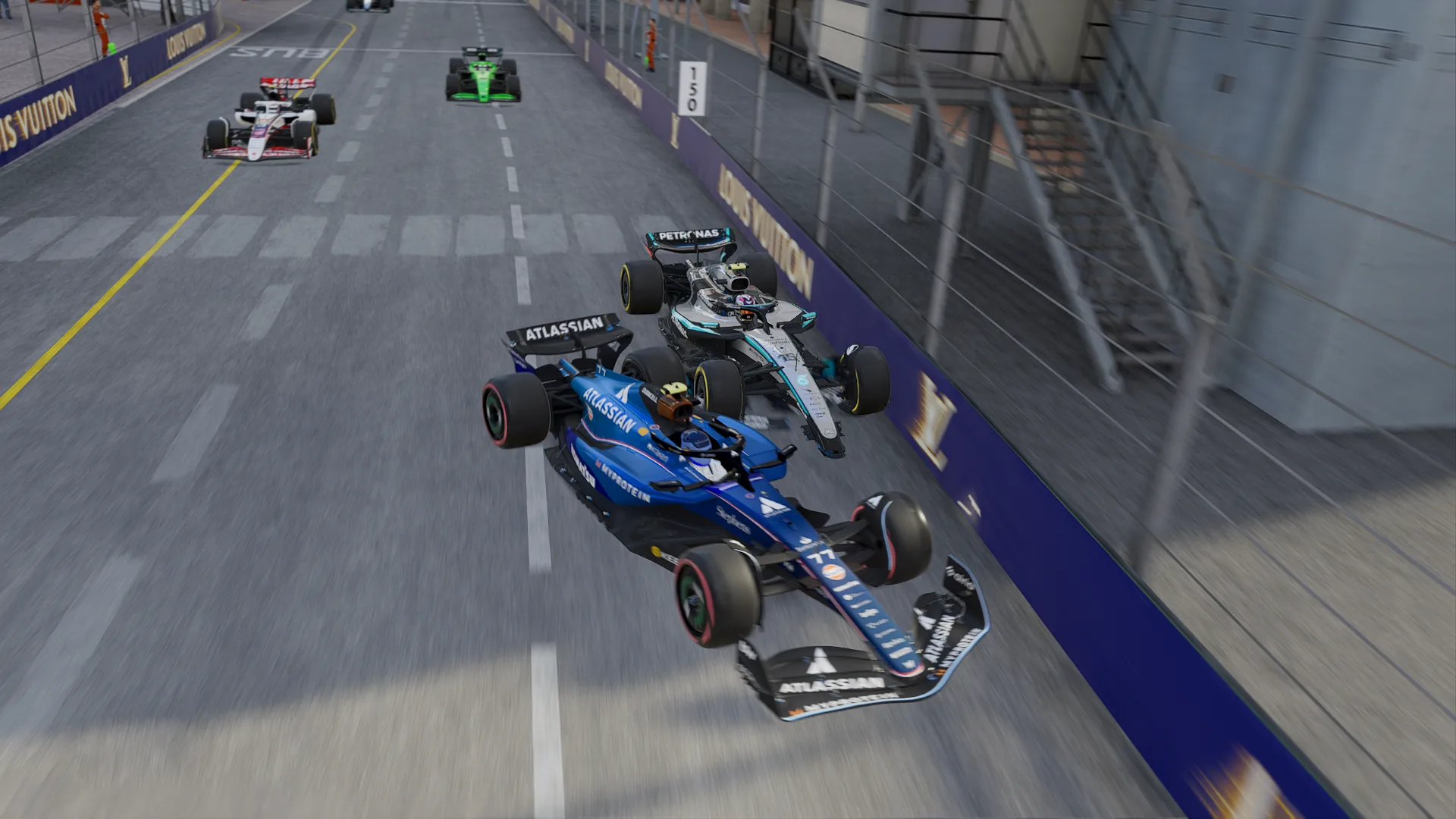
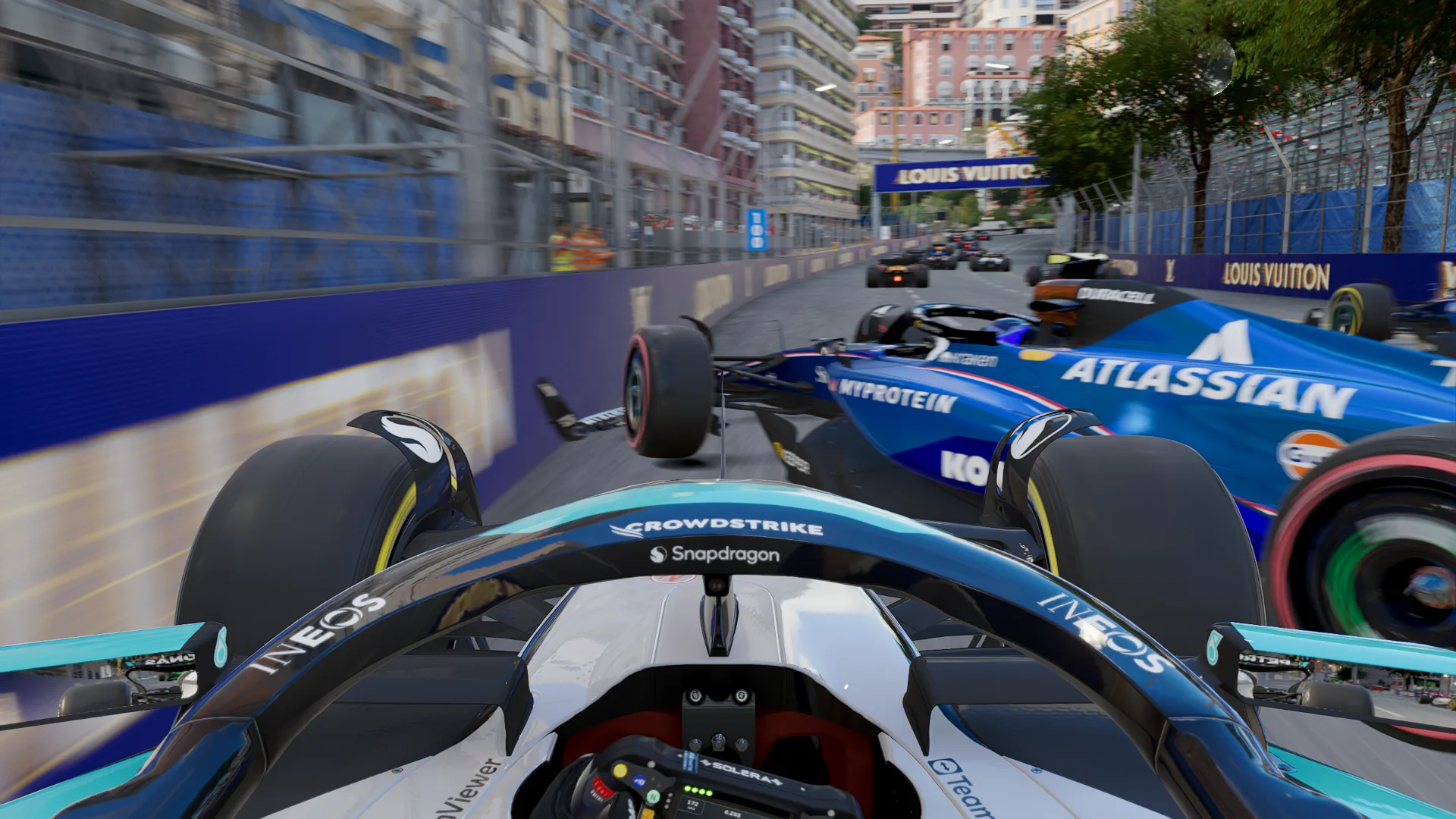
By the halfway point of the championship, the paddock was running out of explanations. Had Mercedes somehow managed to destroy a promising career in record time? Was the kid cursed?
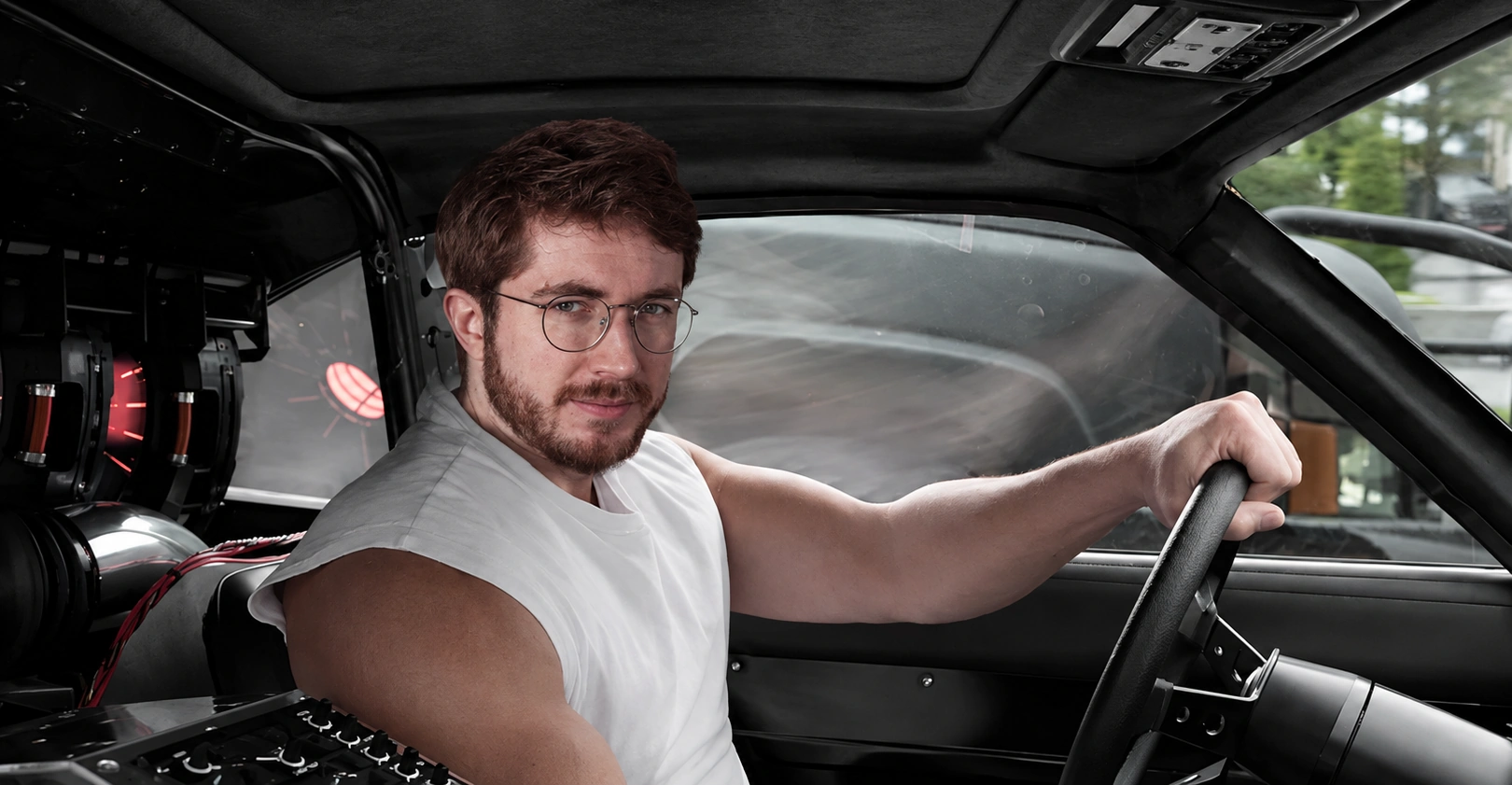
One possible explanation was that he was spending more time in the gym than in the simulator, as his pecs were always impeccably greased. Others pointed to the hours he was logging in ARAM, or the impending release of WoW Forever. Or were the GT3 practice sessions the problem? Whispers of a permanent move to endurance racing began when onlookers noticed he looked far more at home in his Porsche 911 GT3 R than in the Mercedes W16, driving with the confidence of a man who had never once been told to slow down.
It was not a pretty period.
THE MALMÖ REAWAKENING
Then came ESA Summer 2026 in Malmö.
Away from the familiar surroundings of the Formula Один paddock, the offline HEK GP Invitational at Interlagos offered Turboslav an unexpected opportunity to rediscover himself. There was, however, one rather significant complication: having switched to a wheel-and-pedal setup for Season 3, he was forced to return to the controller.
What happened next was difficult to explain, even for those who witnessed it.
The swagger had returned. Starting 11th, he scythed his way up to 6th and looked like a different driver, the one that had dominated the rookie conversation a year earlier. Perhaps the wheel had been the problem all along. Perhaps it was never about the car. Perhaps somebody had simply reminded him which way to point it.
Naturally, the pit crew cocked it up again with an inexplicable switch to soft tyres on lap 26, just as the rain was picking up. Turboslav crossed the line in 9th, but walked away with the award for most overtakes, which told everyone everything. The speed, unmistakably, was back.
And as the championship travelled to Zandvoort for Round 6, there was a growing feeling that Turboslav might finally have something to show for his efforts.
THE DUTCH MASTERCLASS
Rain was once again on the menu for the sprint race, and Turboslav wasted little time making his intentions clear. Starting eighth, he carved his way through the field to finish fourth, delivering his most convincing performance of the season.
Qualifying for Sunday's Grand Prix brought an even bigger surprise. With Sajiki Jones spinning out before completing a single lap, Turboslav capitalised on the opportunity and secured an astonishing third-place starting position.
For the first time in months, the Czech was genuinely in the conversation.
But there was a rather substantial problem standing between him and glory. Ahead sat Elgu Lorenzo-Quaker and, more importantly, the almighty Rum Balls Bradford. Multiple world champion, reigning titleholder and arguably the last person on the grid anyone would willingly choose to fight for a Grand Prix victory. Bradford had the machinery, the experience and the reputation. Turboslav had a third-place grid slot and, apparently, absolutely nothing to lose.
When the lights went out, the Czech made it clear that he had not travelled to Zandvoort to admire the scenery.
What followed was a remarkable display of aggression, precision and outright refusal to accept the established order. Turboslav kept himself within striking distance of the leaders, matching the pace of drivers who had spent the entire season operating on an entirely different level. The Ferrari of Bradford remained a formidable obstacle, while Lorenzo-Quaker was equally unwilling to surrender his position.
Yet Turboslav was relentless. Lap after lap, he applied pressure, searched for openings and refused to disappear into the background. Eventually, the opportunity came. First Bradford, then Lorenzo-Quaker. Two of Formula Один's most decorated competitors, dispatched by a driver who had spent the opening half of the season struggling to score points.
Suddenly, against all reasonable expectations, Vahishton Turboslav was leading the Dutch Grand Prix.
And just when it looked as though the fairytale might actually have a happy ending, Formula Один decided to remind everyone that it rarely does anything the easy way.
A late Safety Car brought Sajiki Jones right back into the picture. The advantage Turboslav had painstakingly built was gone. The gap was erased, the field compressed and the championship's perennial troublemaker was now breathing down the Czech's neck. One mistake, one lock-up, one slightly optimistic braking manoeuvre and months of redemption could have disappeared in an instant.
The final lap was an exercise in pure survival. Every corner felt like a potential disaster. Every braking zone carried the weight of an entire season's worth of frustration. Behind him, Jones was waiting. Ahead of him, the chequered flag was getting closer.
Turboslav did not blink.
He held his line, kept his composure and somehow navigated the final kilometres without surrendering to the pressure. When he finally crossed the finish line, the impossible had become reality.
Vahishton Turboslav had won the Dutch Grand Prix.
Not through attrition. Not through a fortunate Safety Car lottery. Not because the favourites had collectively forgotten how to drive. He had gone wheel-to-wheel with the reigning world champion, beaten two established frontrunners and survived a last-lap showdown to claim the biggest result of his career.
From eighth in Saturday's wet sprint to first on Sunday. From the depths of the Mercedes midfield to the top step of the podium.
If Season 3 needed a resurrection story, Zandvoort had just delivered one for the ages. Not bad for a driver who, only weeks earlier, was questioning his future in motorsport.
A NEW CHAPTER?
It is tempting to describe Zandvoort as a miracle. It is perhaps even more tempting to suggest that Mercedes should immediately replace its entire simulator department with a controller and a comfortable sofa.
But jokes aside, Turboslav's victory raises an important question: was this merely a spectacular one-off, or have we just witnessed the beginning of a second coming?
The talent was never really in doubt. Season 2 proved that. What Season 3 demonstrated was just how quickly confidence can disappear in a sport as unforgiving as Formula Один. Yet, in the space of a few weeks, Turboslav has gone from a driver seemingly destined for obscurity to one who has beaten the very best on the grid.
The ARAM career can probably wait.
For now, Vahishton Turboslav is a Formula Один race winner. And if Zandvoort has taught us anything, it is that counting out the Czech prodigy might be the most dangerous mistake anyone in this paddock can make.